Short answer: Yes. A manufacturer can reverse-engineer a supplement or skincare product from a finished sample, but the result is a close match built through label review, lab testing and bench work, not a guaranteed identical copy. Federal trade-secret law treats reverse engineering as a lawful way to learn a formula. Plan it as development work, with new stability testing, not as a repeat order.
Definition you can quote: Reverse-engineering a formula means working backward from a finished product (its label, lab analysis and how it looks, feels and performs) to build a new formula that matches it closely enough that your customers notice no difference.
When does a brand need to reverse-engineer its own product?
Usually when a brand wants to move to a new manufacturer and can't take the formula with it. The old manufacturer may hold the formula, may not release it, or the documents may simply be incomplete. Brands switch manufacturers for compliance concerns, quality problems, supply-chain difficulties or cost.
That's the situation our switching manufacturers page is built for: PMG takes over existing formulas, including reverse-engineering from a finished sample when the formula isn't available. We review the product and the documents you have to scope the work, rather than assume a transfer is a simple repeat order.
This guide is about recreating your own product. Copying someone else's brand raises separate questions, covered in the FAQ below.
Is it legal to reverse-engineer a formula?
Under federal trade-secret law, reverse engineering is not treated as an improper way to learn a secret. The Defend Trade Secrets Act definitions say "improper means" "does not include reverse engineering, independent derivation, or any other lawful means of acquisition" (18 U.S.C. §1839(6)(B)).
That's not the whole picture, though. Contracts can limit what you may do (check your manufacturing agreement and any NDA), and patents, trademarks and packaging design are separate questions. If your old manufacturer claims it owns the formula, have an attorney read the agreement before you start. This post isn't legal advice.
What does the label tell a formulator, and what does it hide?
The label is the starting map, not the recipe. Neither a cosmetic label nor a supplement label gives a full formula.
| Label rule | What it reveals | What it hides |
|---|---|---|
| Cosmetics: ingredients “declared in descending order of predominance” (FDA) | The full ingredient list, roughly ranked by amount | Exact percentages |
| Cosmetics: ingredients at one percent or less “may be declared without regard for predominance” (21 CFR 701.3(f)(2)) | Which minor ingredients are present | Their order and amounts, which often drive feel, preservation and scent |
| Cosmetics: FDA-accepted trade secrets may appear as “and other ingredients” (21 CFR 701.3(a)) | That something is withheld | What it is |
| Supplements: proprietary blend ingredients “declared in descending order of predominance by weight,” with the blend's total weight (21 CFR 101.36(c)) | What's in the blend and its total weight | The amount of each ingredient inside it |
As Operation Supplement Safety (OPSS) puts it, "The only way to know what is in any particular dietary supplement product is through laboratory testing."
How does formula matching work, step by step?
We think of it as the Match Ladder: each rung narrows the gap between "looks similar" and "your customers can't tell."
- Gather. Finished samples (ideally from more than one lot), the current label, and any spec sheet, SOP or pricing from your current manufacturer.
- Read the label. List every ingredient, note the one-percent line on skincare and any proprietary blend on supplements.
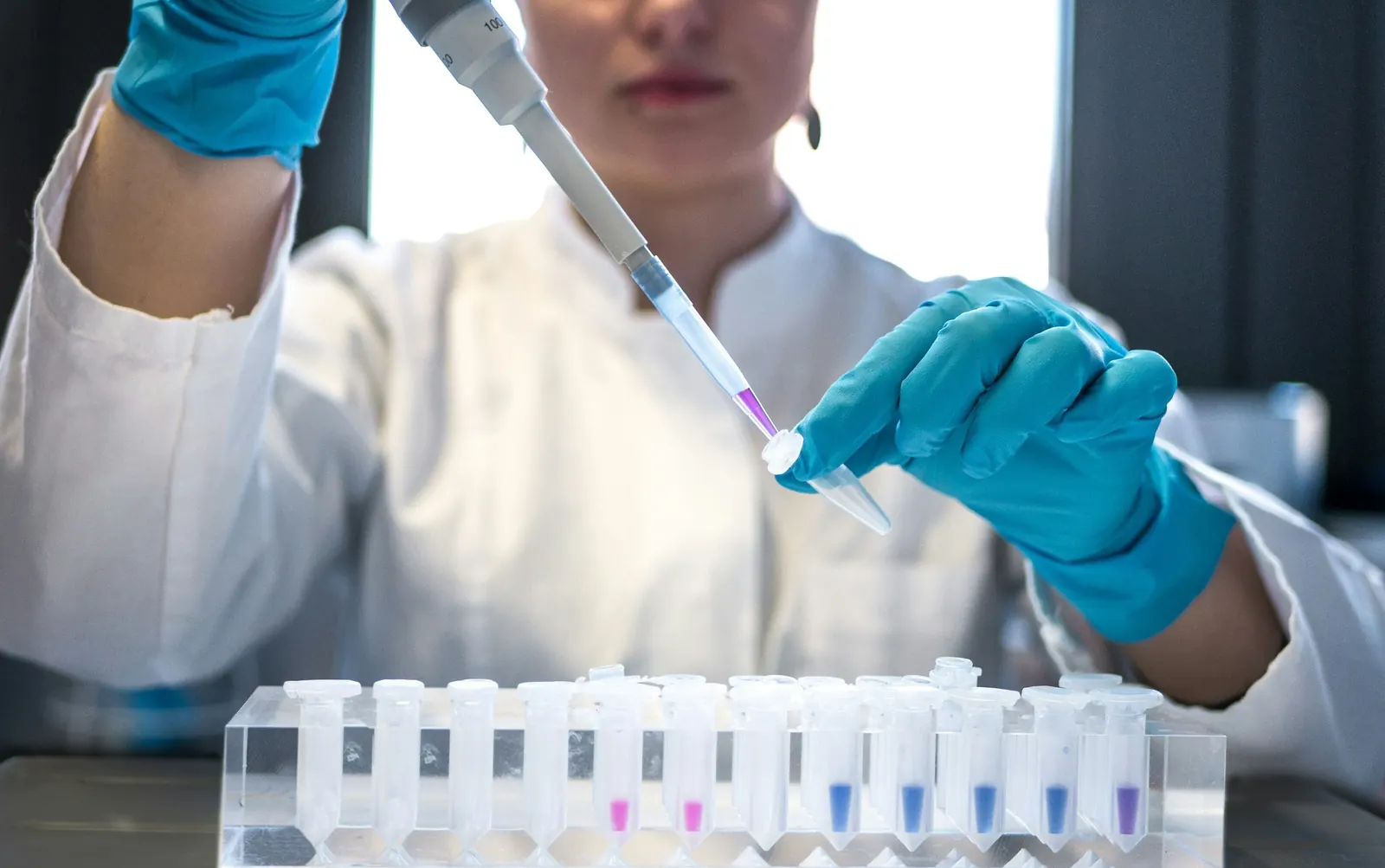
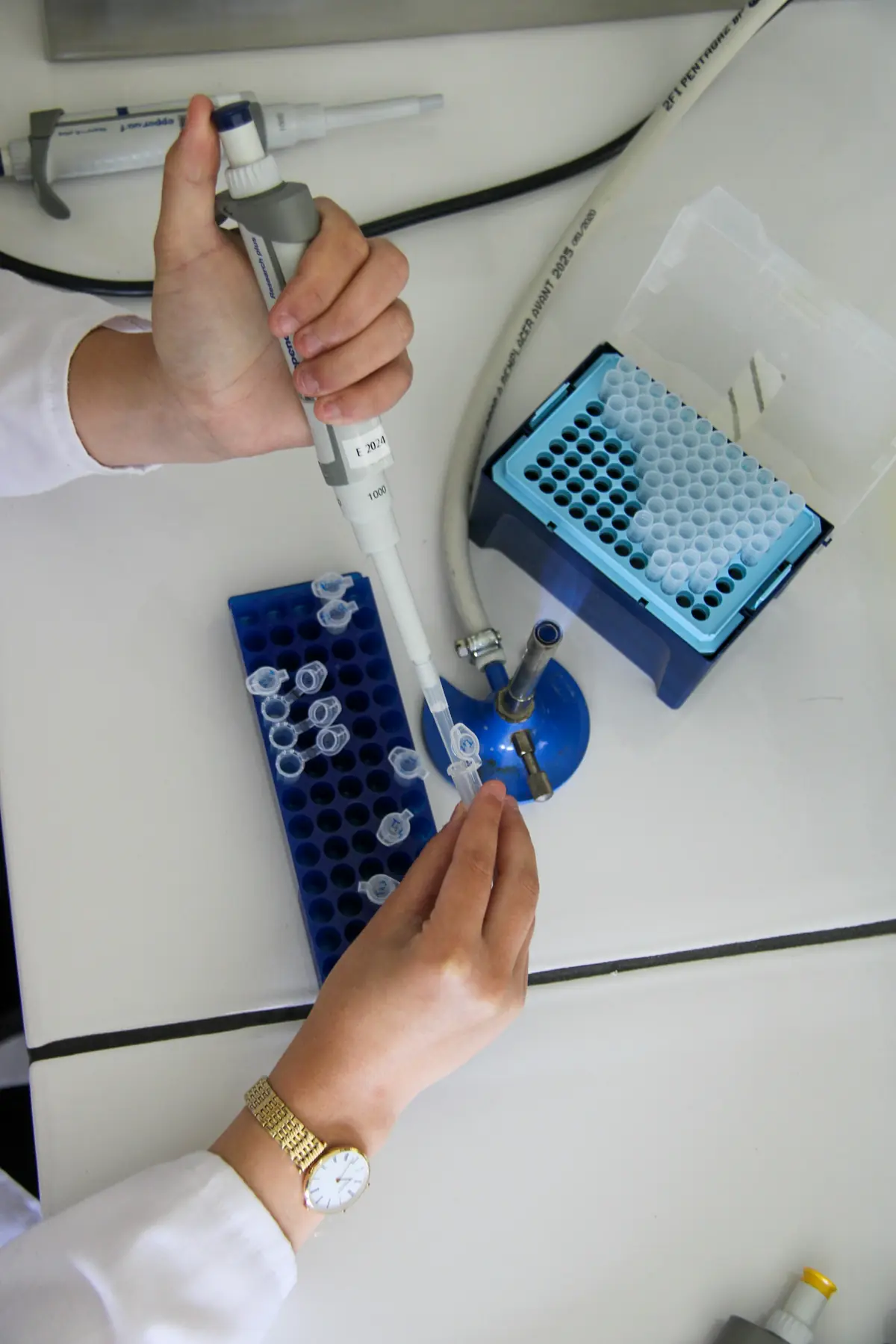
- Test in the lab. Analytical testing identifies and measures what the label can't, especially the active ingredients.
- Bench-match. The formulator builds prototypes and compares them side by side with your sample: look, feel, scent, taste, texture.
- Prove it. A recreated product is a new formula, so it needs its own stability testing. For supplements, the manufacturer prepares a master manufacturing record, which 21 CFR 111.205 requires for each unique formulation and batch size.
- Approve and run. You sign off on the matched sample and the label, then move to the first production run.
Have a product in mind? Ask us directly.
Ready to price your product? Start a Project →
Do you have the formula, a spec sheet or only a sample?
| What you have | What the new manufacturer can do | Biggest risk |
|---|---|---|
| Full formula with percentages and raw material specs | Transfer it and validate it on their equipment | Raw materials from different suppliers behave differently |
| Spec sheet only (finished product specs, no full formula) | Use the specs as targets and fill gaps with testing | Missing grades, suppliers or process steps |
| Finished sample only | Reverse-engineer through the Match Ladder | Minor ingredients, withheld “other ingredients” and blend ratios are the hardest to pin down |
What does it cost and how long does it take at PMG?
PMG scopes every transfer individually, so there's no flat reverse-engineering fee. What PMG publishes today: typical first runs are $5,000 to $25,000 for stock formulas and $25,000+ for custom, and the smallest project is about $5,000 (switching manufacturers). Custom formulation runs 4 to 6 months at a 5,000-unit MOQ for non-supplement products; custom supplements are quoted per project, typically starting at 2,500 to 5,000 units depending on format (private label vs custom formulation). A recreated formula is development work, so ask for a scoped quote rather than assuming repeat-order timing.
Reverse-Engineering Readiness Checklist
Download the fillable checklist (PDF)
- Several finished units, ideally from two or more lots
- A photo or copy of the current label and any older label versions
- Any spec sheet, COA or SOP from your current manufacturer
- Your current pricing, so the quote compares like with like
- Retail SKU details and where you sell today
- Your manufacturing agreement, read by an attorney if ownership is unclear
- The claims on your label and website, so the new formula still supports them
- Customer notes on what must not change (scent, texture, taste, color)
- Inventory on hand, so you don't run out during the match
- Budget for stability testing on the new formula
Reverse-Engineering Readiness Checklist
A printable 1-page checklist with all 10 items to gather before a manufacturer matches your formula.
PDF · 1 page
Glossary
- Tech transfer: moving a known formula and process to a new manufacturer.
- Spec sheet: the finished product's target specifications (appearance, pH, active amounts and similar).
- Bench match: lab prototypes made to match a reference sample.
- Proprietary blend: a supplement blend labeled with its total weight, not each ingredient's amount.
- Stability testing: testing that shows the product holds up over its shelf life.
- MMR: master manufacturing record, the master recipe and instructions for a supplement.
- COA: certificate of analysis, the test results for a batch.
Frequently asked questions
Will the recreated product be identical?
Not guaranteed. The goal is a match your customers can't tell apart, confirmed side by side with your sample before you approve it.
Can a manufacturer copy a competitor's product?
Federal trade-secret law doesn't treat reverse engineering as improper means, but patents, trademarks, packaging design and contracts are separate issues. Talk to an attorney first, and be ready to explain whose product it is.
Do I need new stability testing?
Plan for it. A recreated product is a new formula, even if it matches the old one closely.
What should I send PMG to get a quote?
Your current spec sheet or formula (or finished samples to reverse-engineer), your current manufacturer's SOP and pricing, retail SKU details and your reason for switching.
How long does it take?
PMG scopes each transfer. Its published timeline for custom formulation is 4 to 6 months.
Have a product in mind? Ask us directly.
What Is a Master Manufacturing Record for Supplements? What 21 CFR 111 Requires, How It Differs From a Batch Record, and What Your Brand Should Ask For
What 21 CFR 111 requires in a supplement master manufacturing record and batch record, who is responsible, and what to ask your manufacturer.
Read the article →What Does Amazon Require Before You Can Sell a Private Label Supplement? TIC Testing, GMP Proof and Who Does What
What Amazon requires before you list a private label supplement: TIC verification, no direct COAs, GMP proof, and who does what. Plus a checklist.
Read the article →Turnkey or Consigned Ingredients? Should You Supply Your Own Raw Materials to a Supplement or Skincare Manufacturer?
Turnkey vs consigned ingredients for supplement and skincare brands: what FDA's GMP rules require, hidden costs, and a 10-point readiness checklist.
Read the article →What Should You Send a Contract Manufacturer to Get an Accurate Quote? A Product Brief Checklist for Supplement and Skincare Brands
The 9-line product brief for an accurate supplement or skincare manufacturing quote: claims, quantity, packaging, testing, channels and budget.
Read the article →How Do You Price a Private Label Supplement or Skincare Product? Cost per Unit, Margins for Amazon, Retail and DTC
Turn your cost per unit into a shelf price: what you keep on Amazon, your own site and in retail, keystone vs margin, and a pricing checklist.
Read the article →What Happens If Your Private Label Supplement or Skincare Product Has to Be Recalled? Lot Codes, FDA Recall Classes and a Recall-Ready Checklist
What happens if your private label supplement or skincare product is recalled: FDA recall classes, lot code rules, who acts and a recall-ready checklist.
Read the article →Can You Put “Made in USA” on a Private Label Supplement or Skincare Product? The FTC’s “All or Virtually All” Test, Qualified Claims and a Checklist
Can a private label supplement or skincare product say Made in USA? The FTC’s 3-part test, qualified claims, California’s rule and a sourcing checklist.
Read the article →What Changes When You Scale a Private Label Supplement or Skincare Product From Your First Run to 10,000+ Units?
What changes when you scale a private label supplement or skincare product past your first run: batch records, FDA listings, lead times and per-unit cost.
Read the article →Can a Spa or Med Spa Launch Its Own Private Label Skincare Line? Claims, Labels, MoCRA Rules and Minimums
How a spa or med spa launches its own skincare line: which claims make it a drug, what the label needs under MoCRA, professional-use rules and PMG minimums.
Read the article →Capsules, Tablets or Stick Packs? How to Choose a Private Label Supplement Format (Minimums, Testing and Label Rules)
Capsules, tablets or stick packs (sachets)? Compare minimums (from 1,000 units at PMG, varies by format), label wording, testing and FDA rules before choosing a format.
Read the article →What Do Retailers Require Before They Stock Your Private Label Supplement or Skincare Product? Barcodes, Insurance, Testing and Audits
Barcodes, liability insurance, FDA filings, test results and routing guides: the 6 checks retailers run before stocking your private label product.
Read the article →Does Your Private Label Supplement or Skincare Product Need a Prop 65 Warning? Who Decides, What It Says and the 2025 Short-Form Rules
Does your private label supplement or skincare product need a Prop 65 warning? Who's responsible, what it must say, the 2025 short-form rules and a checklist.
Read the article →How Long Does Stability Testing Take for a Private Label Skincare Product? Accelerated vs Real-Time, Challenge Tests and Shelf Life
Accelerated stability testing typically runs about 3 months at PMG, with real-time testing to confirm shelf life. What cosmetics and OTC drugs need.
Read the article →What Should a Supplement Certificate of Analysis (COA) Show? A Line-by-Line Guide for Private Label Brands
What a supplement certificate of analysis must show under 21 CFR 111: methods, limits, actual results, identity and heavy metals, plus a printable checklist.
Read the article →Which Certifications Should a Supplement or Skincare Manufacturer Have? cGMP, NSF, USP, Organic, Kosher and Halal Explained
Certifications a supplement or skincare maker needs: what FDA requires, what NSF, USP and ISO 22716 audits prove, and organic, kosher, halal rules.
Read the article →What Has to Be on a Private Label Supplement Label? Supplement Facts, Claims, Disclaimer and Allergens
What a private label supplement label must include: 5 required statements, Supplement Facts rules, the claims disclaimer, allergens and adverse event contact.
Read the article →Who Is the Responsible Person Under MoCRA When You Private Label a Cosmetic?
Under MoCRA, the company named on a private label cosmetic's label is the responsible person. See who registers, lists and reports adverse events.
Read the article →Is Your Massage Oil or Muscle Rub a Cosmetic or an OTC Drug?
When a massage oil becomes an OTC drug: claims, FDA M017 menthol and camphor levels, child-resistant packaging, Drug Facts, minimums and timelines.
Read the article →Can You Private Label Hotel Amenities? Body Wash, Shampoo and Lotion for Boutique Hotels and Spas
How boutique hotels and spas private label body wash, shampoo and lotion: minimums, timelines, state small-bottle laws and what the label must include.
Read the article →What Is a Pilot Batch, and Can Your First Production Run Be Under 1,000 Units?
Lab sample vs pilot batch vs first production run, why tiny runs cost more per unit, six realistic options below 1,000 units, and a downloadable readiness checklist.
Read the article →Can You Private Label Essential Oils and Aromatherapy Kits for Amazon?
How claims set the FDA category, what Amazon hazmat review needs, when caps must be child-resistant, and PMG's minimums.
Read the article →Can You Make Sugar-Free Pectin Gummies with Allulose?
How the gel changes without sugar, allulose vs sugar alcohols vs monk fruit and stevia, what a sugar-free label needs, and realistic minimums.
Read the article →How to Choose a Private Label Manufacturing Partner
10 questions to ask before you sign, plus a free evaluation checklist.
Read the article →MOQ and Manufacturing Volume: What Actually Matters
Why minimums exist, what they cost below volume, and how to plan a first run you can sell through.
Read the article →How Much Does It Cost to Manufacture Supplements?
A phase-by-phase breakdown of R&D, ingredients, production, packaging, and compliance costs.
Read the article →What Does It Take to Manufacture an OTC Acne Product?
Allowed actives and strengths, Drug Facts labeling, NDCs and registration, and realistic OTC minimums and timelines.
Read the article →Sources
- 1.18 U.S.C. §1839 (Defend Trade Secrets Act definitions), govinfo.gov https://www.govinfo.gov/content/pkg/USCODE-2023-title18/html/USCODE-2023-title18-partI-chap90-sec1839.htm
- 2.FDA, Summary of Cosmetics Labeling Requirements, fda.gov https://www.fda.gov/cosmetics/cosmetics-labeling-regulations/summary-cosmetics-labeling-requirements
- 3.21 CFR 101.36, Nutrition labeling of dietary supplements, govinfo.gov https://www.govinfo.gov/content/pkg/CFR-2024-title21-vol2/pdf/CFR-2024-title21-vol2-sec101-36.pdf
- 4.Operation Supplement Safety (OPSS), Proprietary blends: What does this mean?, opss.org https://www.opss.org/article/proprietary-blends-what-does-mean
- 5.PMG, Switching manufacturers https://productmgmtgroup.com/switch-manufacturers
- 6.PMG, Private label vs custom formulation https://productmgmtgroup.com/services/private-label-vs-custom-formulation
- 7.PMG Journal, What Is a Master Manufacturing Record? (21 CFR 111.205) What Is a Master Manufacturing Record?
About Product Management Group
PMG is a full-service private label manufacturing partner for skincare, nutraceuticals, supplements, personal care, and wellness brands. We handle everything from R&D and formulation through manufacturing, packaging, regulatory compliance, and fulfillment, working with FDA-registered, GMP-compliant partner facilities in Florida, North Carolina, Texas, Minnesota, and Arizona. We work with everyone from first-time founders to established retail brands, with minimums starting at 1,000 units.