
Short answer: At PMG, capsules, tablets and stick packs run 5,000–10,000 units, while stock powders start as low as 1,000 units. Choose by dose and ingredients: capsules hold powder in a shell, tablets press it into a solid piece that can be coated, and stick packs hold one serving. All follow the same FDA quality rule, 21 CFR Part 111.
Definition — supplement format: the physical form a dietary supplement is sold in (capsule, tablet, softgel, powder, stick pack or gummy). The format sets your fill limits, packaging, testing, label wording and minimum order, so it is one of the first decisions in a private label project.
Key stats: supplement formats and buyers
- 57.6% of U.S. adults aged 20 and over used a dietary supplement in the past 30 days (2017–2018); women 63.8%, men 50.8%. Source: CDC/NCHS Data Brief No. 399.
- The most common types were multivitamin-mineral supplements, followed by vitamin D and omega-3. Source: CDC/NCHS Data Brief No. 399.
- 75% of Americans reported using dietary supplements in CRN's 2024 Consumer Survey (Ipsos, 3,194 U.S. adults). Source: Council for Responsible Nutrition, Oct 29, 2024.
- Magnesium use rose from 19% to 23% of supplement users between 2023 and 2024. Source: CRN 2024 Consumer Survey.
- FDA must receive a new dietary ingredient notification at least 75 days before a product containing it is marketed. Source: FDA.
Which supplement formats can a private label brand choose from?
PMG's partner facilities make capsules (hard gelatin and vegetarian), softgels, tablets (coated and uncoated), gummies, powders (bulk and stick packs), liquids and shots, and effervescent tablets. This guide compares three of them: capsules, tablets and stick packs. Gummies are a separate decision with their own minimums, covered in our low MOQ supplement guide.
How do capsules, tablets and stick packs compare?
| Factor | Capsules | Tablets | Stick packs |
|---|---|---|---|
| PMG minimum (stock or custom) | 5,000–10,000 units | 5,000–10,000 units | 5,000–10,000 units |
| What goes inside | Powder in a two-piece shell (gelatin or HPMC/vegetarian) | Compressed powder, coated or uncoated | One serving of powder in a single-serve sachet |
| Serving size wording on the label | "capsules" | "tablets" | "sachets" |
| Disintegration test reference (USP <2040>, where a monograph requires it) | Hard-shell capsules: 30 minutes | Uncoated tablets: 30 minutes | Not covered (powder) |
| Best fit | Powder blends; vegetarian products with HPMC shells | Blends that compress well; actives that need a coating for taste or stability | Single-serve powders and drink mixes |
| Questions to ask first | How many capsules per serving at your dose? | Does the blend compress well? Coated or uncoated? | Does the powder flow and stay dry in the sachet film? |
Minimums: PMG's Nutraceuticals & Supplements page. Label terms: 21 CFR 101.36. Test times: USP general chapter <2040> (USP 35–NF 30 edition).
When are capsules the right choice?
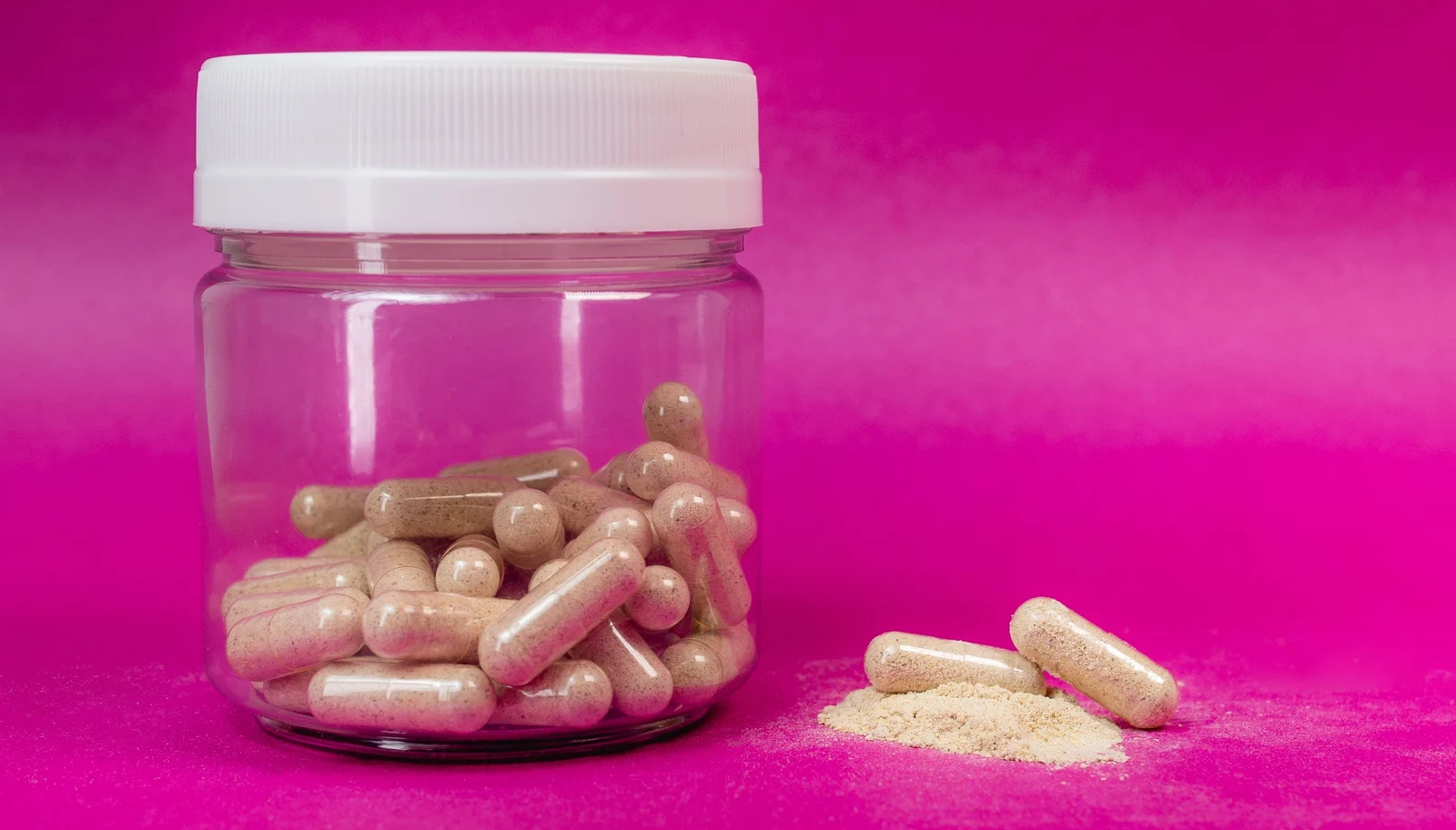
Capsules are a common choice for powder blends because the powder goes into a ready-made shell instead of being pressed into a tablet. You choose the shell: traditional gelatin, or HPMC (hypromellose), a vegetarian shell made from plant-derived cellulose. A capsule maker's technical paper says HPMC capsules were developed because some consumers prefer products without animal ingredients, and reports that one HPMC capsule product showed three-fold lower average moisture content than gelatin capsules in a study, which can help with moisture-sensitive ingredients. Ask for stability data on your own formula rather than assuming the shell solves it.
Check the dose early. If one serving takes several capsules, that changes the label, the bottle size and the cost per serving.
When should you choose tablets instead?
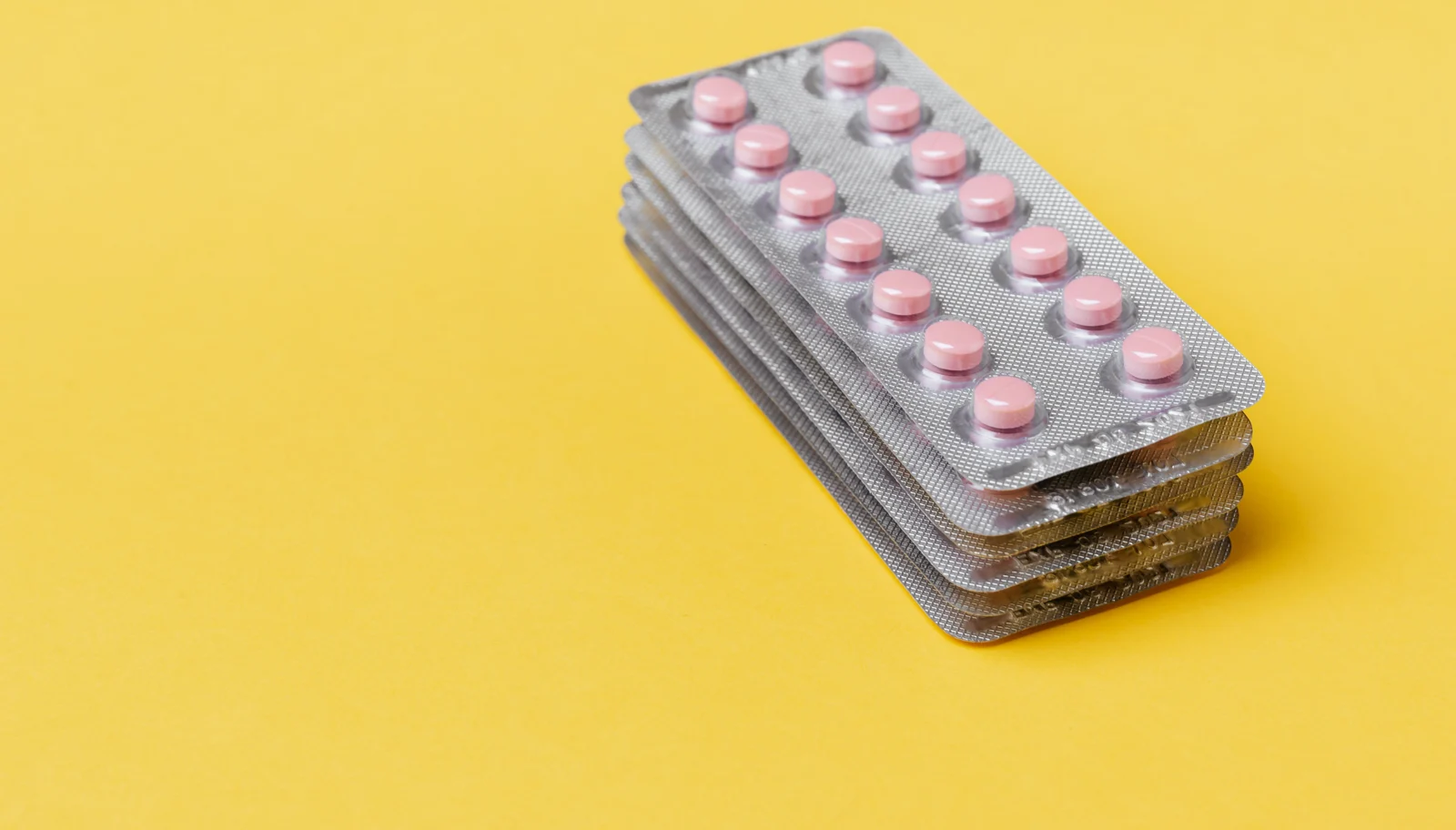
Tablets press the blend into a solid piece. As PMG's supplements page notes, certain actives need coatings for stability or taste masking, and tablets can be made coated or uncoated. Ask your manufacturer whether your blend compresses cleanly before you commit. Where a USP monograph calls for a disintegration test, USP's chapter <2040> sets 30 minutes for uncoated tablets, so plan that testing into the timeline.
When do stick packs make the most sense?
Stick packs, often called sachets, are single-serve servings of powder. They can suit drink mixes and doses that would take several capsules per serving. The label serving is a "sachet", and each sachet holds one full serving. The practical questions are about the powder and the film: does it flow evenly into small sachets, and does it stay dry and stable on the shelf? Bulk powder in a tub is the lower-minimum version of the same product; at PMG, stock powders start as low as 1,000 units.
Have a product in mind? Ask us directly.
Do the FDA rules change by format?
No. Every format falls under the same supplement manufacturing rule, 21 CFR Part 111. Manufacturers must set specifications for the identity, purity, strength and composition of each finished batch, plus limits on contamination, and must verify that finished batches meet them (for every batch, or a subset chosen through a sound statistical sampling plan). That is what a certificate of analysis documents.
FDA does not approve dietary supplements before they are sold. The firm that makes or distributes the product is responsible for making sure it is not adulterated or misbranded. If your formula uses a new dietary ingredient (one not marketed in the U.S. before October 15, 1994), FDA must be notified at least 75 days before it goes on sale.
What does change is the label. The panel must be titled "Supplement Facts", and the serving size must use a term that fits the form, such as "tablets", "capsules" or "sachets". See our supplement label guide for the full list.
How do minimums and budget change by format?
Here are the minimums PMG publishes on its supplements page:
- Capsules, tablets and stick packs: 5,000–10,000 units
- Stock powders: as low as 1,000 units
- Select stock gummy formulas: as low as 500–1,000 units (60 count)
- Custom gummies: as low as 2,500 units (60 count)
Setup, testing and documentation are largely fixed for each run, so 10,000 units costs less per unit than 1,000. Private label programs on stock formulas usually launch in 60–90 days; custom formulations typically take 4–6 months. PMG quotes the format, fill and packaging together so the per-unit number reflects the real project. For a phase-by-phase budget, see how much it costs to manufacture supplements.
The 5-F Format Fit Check
Run your product through these five questions before you request quotes:
- 1.Fill: How much powder is one serving, and how many capsules, tablets or sachets does that take?
- 2.Feel: How will your customer take it: swallowed with water, mixed into a drink, or carried on the go?
- 3.Fragility: Are any ingredients sensitive to moisture, heat or taste? Do they need a coating, an HPMC shell or a stronger sachet film?
- 4.Funding: Does your budget cover the minimum for that format (5,000–10,000 units for capsules, tablets and stick packs at PMG)?
- 5.Filing: What will the Supplement Facts panel say, does any ingredient need a new dietary ingredient notification, and what claims will you make?
Printable checklist: what to send a manufacturer for a format quote
Download the fillable checklist (PDF)
- Product type and target format (capsule, tablet, stick pack, bulk powder)
- Formula or ingredient list with the dose per serving
- Servings per bottle, box or carton
- Stock formula, modified stock or custom formula
- Quantity for the first run and expected reorders
- Target cost per unit and total budget
- Shell or coating needs (vegetarian/HPMC, coated tablet)
- Packaging (bottle, pouch, stick pack carton) and who supplies it
- Claims you plan to make (vegan, organic, structure-function)
- Sales channel (Amazon, retail, DTC, clinics)
- Launch deadline
Frequently asked questions
What is the minimum order for private label capsules?
At PMG, capsules, tablets and stick packs run 5,000–10,000 units. Stock powders start as low as 1,000 units.
Are vegetarian capsules different from gelatin capsules?
Yes. Vegetarian capsules are commonly HPMC (hypromellose), made from plant-derived cellulose, instead of gelatin. PMG's partner facilities fill both.
Does FDA approve a supplement's format or formula before launch?
No. FDA does not approve dietary supplements before they are marketed. The company is responsible for safety and labeling, and new dietary ingredients need a notification at least 75 days before sale.
How should a stick pack's serving size appear on the label?
The Supplement Facts serving size uses a term that fits the form, such as "sachets", and the label can say "Amount Per Sachet" in place of "Amount Per Serving".
Can I start with bulk powder and move to stick packs later?
Often, yes. Stock powders at PMG start as low as 1,000 units, so a brand can test a tub first and add stick packs (5,000–10,000 units) once sales justify it.
Glossary
- HPMC (hypromellose): a plant-derived cellulose material used for vegetarian capsule shells.
- Gelatin capsule: the traditional two-piece hard capsule shell.
- Softgel: a soft-shell capsule; USP <2040> checks these with a rupture test (15 minutes).
- Stick pack (sachet): a narrow single-serve sachet holding one serving of powder.
- Excipient: an inactive ingredient that helps a blend fill, flow or compress.
- Disintegration test: a lab test of whether tablets or capsules break apart within a set time.
- 21 CFR Part 111: FDA's current good manufacturing practice rule for dietary supplements.
- NDI (new dietary ingredient): an ingredient not marketed in the U.S. before October 15, 1994.
Ready to choose a format? Tell us the product, the dose and the quantity, and we'll tell you which format fits and what a first run takes.
See PMG's supplement manufacturing · start a project
Have a product in mind? Ask us directly.
What Do Retailers Require Before They Stock Your Private Label Supplement or Skincare Product? Barcodes, Insurance, Testing and Audits
Barcodes, liability insurance, FDA filings, test results and routing guides: the 6 checks retailers run before stocking your private label product.
Read the article →Does Your Private Label Supplement or Skincare Product Need a Prop 65 Warning? Who Decides, What It Says and the 2025 Short-Form Rules
Does your private label supplement or skincare product need a Prop 65 warning? Who's responsible, what it must say, the 2025 short-form rules and a checklist.
Read the article →How Long Does Stability Testing Take for a Private Label Skincare Product? Accelerated vs Real-Time, Challenge Tests and Shelf Life
Accelerated stability testing typically runs about 3 months at PMG, with real-time testing to confirm shelf life. What cosmetics and OTC drugs need.
Read the article →What Should a Supplement Certificate of Analysis (COA) Show? A Line-by-Line Guide for Private Label Brands
What a supplement certificate of analysis must show under 21 CFR 111: methods, limits, actual results, identity and heavy metals, plus a printable checklist.
Read the article →Which Certifications Should a Supplement or Skincare Manufacturer Have? cGMP, NSF, USP, Organic, Kosher and Halal Explained
Certifications a supplement or skincare maker needs: what FDA requires, what NSF, USP and ISO 22716 audits prove, and organic, kosher, halal rules.
Read the article →What Has to Be on a Private Label Supplement Label? Supplement Facts, Claims, Disclaimer and Allergens
What a private label supplement label must include: 5 required statements, Supplement Facts rules, the claims disclaimer, allergens and adverse event contact.
Read the article →Who Is the Responsible Person Under MoCRA When You Private Label a Cosmetic?
Under MoCRA, the company named on a private label cosmetic's label is the responsible person. See who registers, lists and reports adverse events.
Read the article →Is Your Massage Oil or Muscle Rub a Cosmetic or an OTC Drug?
When a massage oil becomes an OTC drug: claims, FDA M017 menthol and camphor levels, child-resistant packaging, Drug Facts, minimums and timelines.
Read the article →Can You Private Label Hotel Amenities? Body Wash, Shampoo and Lotion for Boutique Hotels and Spas
How boutique hotels and spas private label body wash, shampoo and lotion: minimums, timelines, state small-bottle laws and what the label must include.
Read the article →What Is a Pilot Batch, and Can Your First Production Run Be Under 1,000 Units?
Lab sample vs pilot batch vs first production run, why tiny runs cost more per unit, six realistic options below 1,000 units, and a downloadable readiness checklist.
Read the article →Can You Private Label Essential Oils and Aromatherapy Kits for Amazon?
How claims set the FDA category, what Amazon hazmat review needs, when caps must be child-resistant, and PMG's minimums.
Read the article →Can You Make Sugar-Free Pectin Gummies with Allulose?
How the gel changes without sugar, allulose vs sugar alcohols vs monk fruit and stevia, what a sugar-free label needs, and realistic minimums.
Read the article →How to Choose a Private Label Manufacturing Partner
10 questions to ask before you sign, plus a free evaluation checklist.
Read the article →MOQ and Manufacturing Volume: What Actually Matters
Why minimums exist, what they cost below volume, and how to plan a first run you can sell through.
Read the article →How Much Does It Cost to Manufacture Supplements?
A phase-by-phase breakdown of R&D, ingredients, production, packaging, and compliance costs.
Read the article →What Does It Take to Manufacture an OTC Acne Product?
Allowed actives and strengths, Drug Facts labeling, NDCs and registration, and realistic OTC minimums and timelines.
Read the article →Sources
- 1.CDC, National Center for Health Statistics. Dietary Supplement Use Among Adults: United States, 2017–2018 (Data Brief No. 399). https://www.cdc.gov/nchs/products/databriefs/db399.htm
- 2.Council for Responsible Nutrition. CRN Survey Shows Consistent Supplement Usage with Increase of Specialty Product Use Over Time (Oct 29, 2024). https://crnusa.org/newsroom/crn-survey-shows-consistent-supplement-usage-increase-specialty-product-use-over-time
- 3.eCFR. 21 CFR 111.70 — What specifications must you establish? https://www.ecfr.gov/current/title-21/chapter-I/subchapter-B/part-111/subpart-E/section-111.70
- 4.eCFR. 21 CFR 111.75 — What must you do to determine whether specifications are met? https://www.ecfr.gov/current/title-21/chapter-I/subchapter-B/part-111/subpart-E/section-111.75
- 5.eCFR. 21 CFR 101.36 — Nutrition labeling of dietary supplements. https://www.ecfr.gov/current/title-21/chapter-I/subchapter-B/part-101/subpart-C/section-101.36
- 6.FDA. Questions and Answers on Dietary Supplements. https://www.fda.gov/food/information-consumers-using-dietary-supplements/questions-and-answers-dietary-supplements
- 7.FDA. How to Submit Notifications for a New Dietary Ingredient. https://www.fda.gov/food/new-dietary-ingredient-ndi-notification-process/how-submit-notifications-new-dietary-ingredient
- 8.USP 35–NF 30. General Chapter <2040> Disintegration and Dissolution of Dietary Supplements. https://www.drugfuture.com/Pharmacopoeia/USP35/data/v35300/usp35nf30s0_c2040.html
- 9.Capsugel (Cade, D.), 2012. Vcaps Plus Capsules: A New HPMC Capsule (technical paper). https://www.capsugel.com/cpsl-web/kc/library/WP-VcapsPlus_30270_FIN_10-8-12.pdf
- 10.Product Management Group. Nutraceuticals & Supplements (minimums, formats, timelines). /industries/nutraceuticals-and-supplements
Supplement Format Quote Checklist
What to send a manufacturer for a format quote
PDF · 1 page
About Product Management Group
PMG is a full-service private label manufacturing partner for skincare, nutraceuticals, supplements, personal care, and wellness brands. We handle everything from R&D and formulation through manufacturing, packaging, regulatory compliance, and fulfillment, working with FDA-registered, GMP-compliant partner facilities in Florida, North Carolina, Texas, Minnesota, and Arizona. We work with everyone from first-time founders to established retail brands, with minimums starting at 1,000 units.