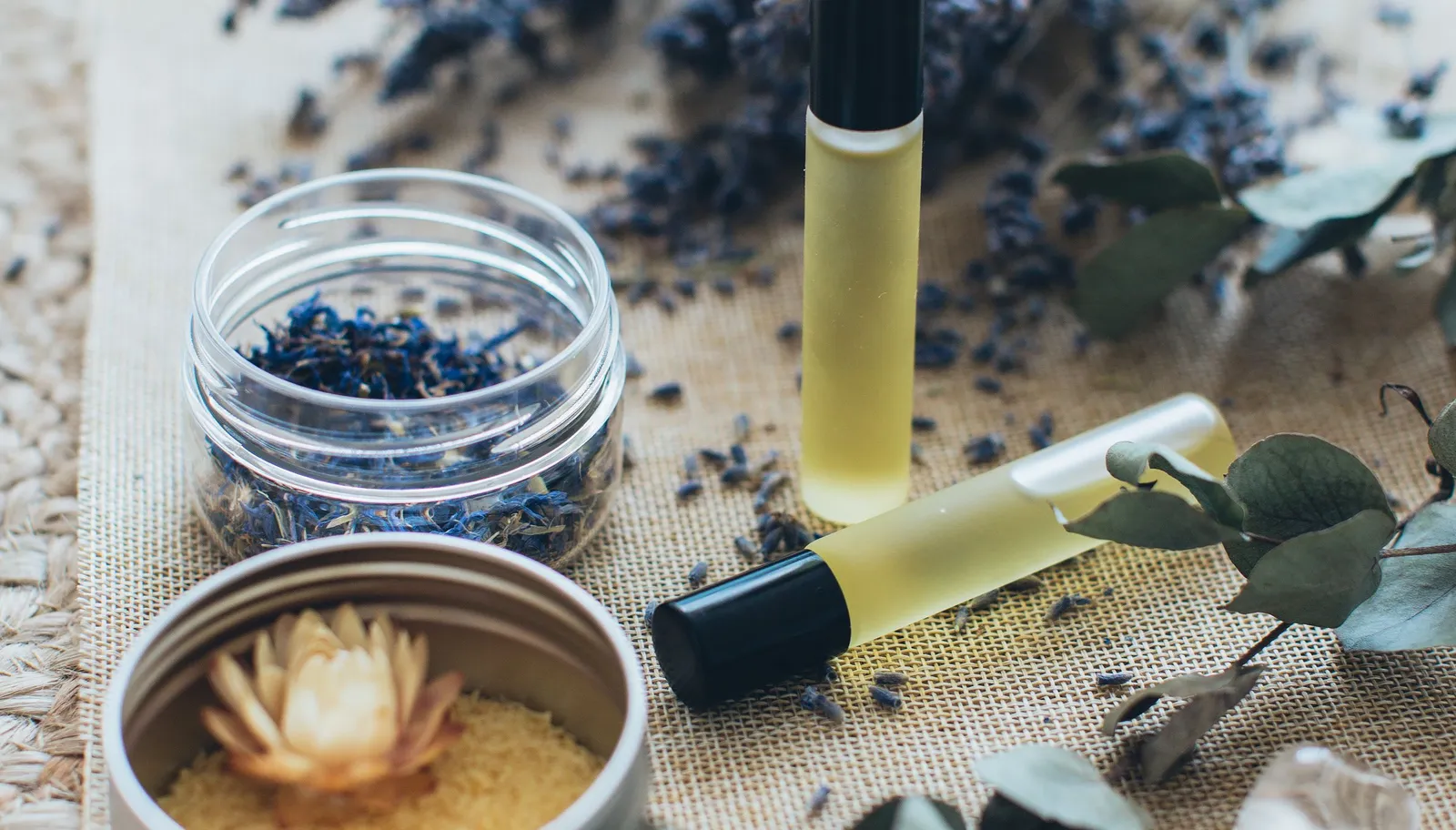
Short answer: It depends on what the label promises and what's in the bottle. A massage oil sold to moisturize or smell good is a cosmetic. Once it claims to relieve muscle aches, or relies on a pain-relief active such as menthol at 1.25–16%, it's an OTC drug. At PMG, stock OTC formulas start at 5,000 units and take 90–150 days.
An OTC external analgesic is a skin-applied product, such as a muscle rub, cream, gel, roll-on or oil, sold without a prescription for the temporary relief of minor aches and pains, using an active ingredient and strength that FDA's external analgesic monograph (M017) allows.
Key numbers: massage oils and muscle rubs in 2026
- 1.25–16%: the menthol range FDA's external analgesic monograph allows in an OTC counterirritant [1]
- 10–60%: the methyl salicylate (wintergreen) range in the same monograph; lidocaine is allowed at 0.5–4% [1]
- More than 5%: liquid products with more than 5% methyl salicylate by weight (other than pressurized sprays) must use child-resistant packaging [7]
- 7 days: an OTC counterirritant rub must tell users to stop and ask a doctor if symptoms persist for more than 7 days [1]
- $19,188 / $12,792: FDA's fiscal 2026 OTC monograph facility fees for a monograph drug facility and a contract manufacturing facility [9]
- 15 business days: the deadline to report a serious adverse event for a cosmetic under MoCRA [10]
What decides whether a massage oil is a cosmetic or a drug?
Intended use. FDA's rule of thumb: a product intended only to cleanse the body or make a person more attractive is a cosmetic; a product intended to treat a condition or "affect the structure or function of the body" is a drug [4]. FDA's aromatherapy guidance names this exact category: claims that a product will "ease pain" or "relax muscles" are drug claims, and they "are sometimes made for products such as soaps, lotions, and massage oils containing 'essential oils'" [3].
Intended use comes from more than the front label. FDA looks at claims on the label, in ads and online, at why consumers buy the product, and at ingredients with a well-known therapeutic use [4].
A product can also be both. FDA's example is anti-dandruff shampoo, which cleanses (cosmetic) and treats dandruff (drug), and a product that is both "must comply with the requirements for both cosmetics and drugs" [4].
In practice, the same oil can land in either category:
- Cosmetic: "Lavender massage oil. Softens skin. Calming scent."
- OTC drug: "Arnica and menthol muscle rub. For the temporary relief of minor aches and pains of muscles and joints."
- Unapproved drug (the risky middle): a "cosmetic" oil sold with "relieves sore muscles" but no monograph active, no Drug Facts and no drug registration.
For more on how claims set the category for essential-oil products, see our guide to private label essential oils and aromatherapy kits.
Which pain-relief actives does the FDA monograph allow, and at what strength?
OTC muscle rubs are made under FDA's external analgesic monograph, M017. Since the 2020 CARES Act, OTC monographs are administrative orders rather than rules, and FDA states M017 is a final administrative order "deemed" by section 505G of the FD&C Act [2]. The monograph lists the permitted actives, including:
| Active ingredient | Type | Allowed strength (M017) |
|---|---|---|
| Menthol | Counterirritant (cooling) | 1.25 to 16% [1] |
| Camphor | Counterirritant (cooling) | Exceeding 3% to 11% [1] |
| Methyl salicylate (wintergreen) | Counterirritant | 10 to 60% [1] |
| Capsaicin (or capsicum) | Counterirritant (warming) | 0.025 to 0.25% capsaicin [1] |
| Histamine dihydrochloride | Counterirritant | 0.025 to 0.10% [1] |
| Lidocaine / lidocaine HCl | Anesthetic | 0.5 to 4% [1] |
The table is a summary of selected actives; the monograph also sets dosage forms, combinations and exact label wording, so the formula and label are checked against the full text before production.
Cosmetic massage oil vs OTC muscle rub: what changes?
| Cosmetic massage or body oil | OTC muscle rub, gel or oil | |
|---|---|---|
| Allowed claims | Moisturize, soften, scent, “relaxing massage experience” | “Temporary relief of minor aches and pains of muscles and joints,” with monograph wording |
| Active ingredients | None required | A monograph active at a monograph strength |
| Label | Cosmetic label with ingredients, net contents, and a U.S. address, phone or website for adverse event reports [12] | Drug Facts panel in the order set by 21 CFR 201.66, plus a U.S. address or phone number for serious adverse event reports [5][11] |
| FDA filings | MoCRA facility registration and product listing [10] | Drug establishment registration and drug listing with an NDC [6] |
| FDA fees | No OMUFA fees (those apply to OTC monograph drugs) | OTC monograph (OMUFA) facility fees, paid by the facility owner [9] |
| PMG minimum | 1,000 units (private label stock formula) [13] | 5,000 units (stock OTC formula) [14] |
| PMG timeline | 60–90 days (private label) [13] | 90–150 days (stock OTC); custom 4–6 months plus regulatory time [14] |
PMG figures come from our private label vs custom formulation page and our OTC and specialty page.
What warnings must an OTC muscle rub carry?
The Drug Facts panel uses fixed headings in a fixed order: Active ingredient(s), Purpose(s), Use(s), Warnings, Directions, Other information and Inactive ingredients, with "Questions?" optional [5]. For counterirritant rubs, the required wording under M017 includes, among others [1]:
- "For external use only"
- Avoid contact with the eyes
- "Do not apply to wounds or damaged skin" and "Do not bandage tightly"
- Stop use and ask a doctor "if condition worsens, or if symptoms persist for more than 7 days or clear up and occur again within a few days"
- Directions: adults and children 2 years and older apply "not more than 3 to 4 times daily"; children under 2 years: "do not use, consult a doctor"
Each active and combination can add its own warnings, so the final panel is built from the monograph text for your exact formula.
Have a product in mind? Ask us directly.
Does a wintergreen (methyl salicylate) oil need child-resistant packaging?
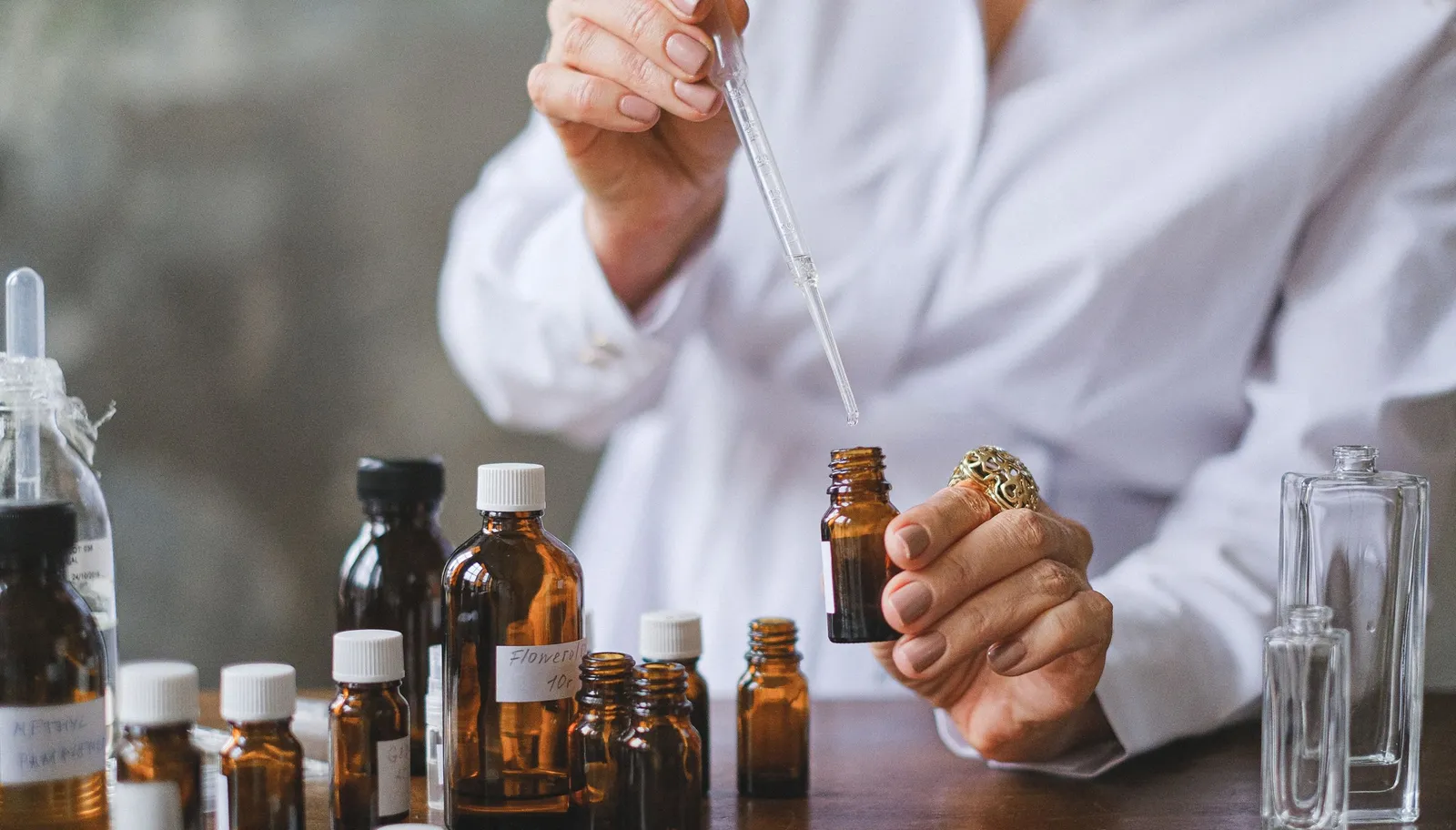
Often, yes. Under the Poison Prevention Packaging Act rules, liquid products containing more than 5% methyl salicylate by weight, other than pressurized sprays, must be in child-resistant packaging [7]. That rule is about the substance and the form, not the claim, so it can apply to a wintergreen-heavy massage oil or roll-on sold as a cosmetic as well as to a drug.
The CPSC has recalled products over it: in March 2020 a wintergreen essential oil was recalled because it "contains the substance methyl salicylate which must be in child resistant packaging" [8]. Decide on the closure before you order bottles, because it changes the component list and cost.
Who registers the product, and who pays the FDA fees?
Cosmetic oils: under MoCRA, manufacturers register their facilities and renew every two years, and the brand's "responsible person" lists each product, keeps safety substantiation records and reports serious adverse events within 15 business days [10].
OTC rubs: the manufacturing facility is registered as a drug establishment. For a private label product, the manufacturer submits the drug listing and proposes an NDC that includes your FDA-assigned labeler code, so the product is identified with your brand [6]. OTC monograph facilities also owe annual OMUFA fees: for fiscal 2026, $19,188 for a monograph drug facility and $12,792 for a contract manufacturing facility [9]. Ask any manufacturer how those costs show up in your price.
What are the minimums and timelines at PMG?
If you keep the product cosmetic, a private label stock formula starts at 1,000 units with about 60–90 days to a first run; custom formulas run 4–6 months at 5,000 units [13]. If the product is an OTC muscle rub, stock OTC formulas start at 5,000 units and take 90–150 days, and custom OTC formulas start at 5,000–10,000+ units and take 4–6 months, not including regulatory or registration time [14]. A practical path is to launch the cosmetic massage oil first and add an OTC rub once the line sells. Our wellness and aromatherapy page covers the cosmetic side.
The 4-Question Claim Check
Run every massage or recovery product through these four questions before you design the label:
- 1.What will the label, website and Amazon listing promise? Any pain, ache, soreness or muscle-relaxing claim points to a drug.
- 2.Is there a monograph active at a monograph strength? If you want the claim, you need one (M017 table above). If not, drop the claim.
- 3.Does the formula trigger packaging rules? More than 5% methyl salicylate in a liquid means child-resistant packaging.
- 4.Which filings and label does that create? Cosmetic: MoCRA listing and a cosmetic label. Drug: registration, listing, NDC and Drug Facts.
Massage Oil & Muscle Rub Label Checklist
Download the fillable checklist (PDF)
Use this list before you design labels or request quotes:
Both product types
Cosmetic massage oil
Glossary
- Counterirritant: an active that creates a cooling, warming or tingling feeling to distract from minor aches (menthol, camphor, methyl salicylate, capsaicin).
- Monograph (M017): FDA's rulebook for OTC external analgesics: allowed actives, strengths, uses and label wording.
- Administrative order: the form OTC monographs have taken since the 2020 CARES Act.
- Drug Facts: the standardized OTC label panel set by 21 CFR 201.66.
- NDC: National Drug Code; its first segment is the labeler code.
- OMUFA: the OTC monograph user fee program created by the CARES Act.
- MoCRA: the Modernization of Cosmetics Regulation Act of 2022.
- PPPA: the Poison Prevention Packaging Act, enforced by the CPSC.
Frequently asked questions
Can I call my massage oil “relaxing”?
Describing a relaxing scent or massage experience is generally cosmetic. Saying it “relaxes muscles” is a drug claim under FDA's aromatherapy guidance. [3]
Can a cosmetic massage oil contain menthol or camphor?
An ingredient alone doesn't make a drug, but FDA also weighs ingredients with a well-known therapeutic use. Keep the claims strictly cosmetic and have the formula and label reviewed before launch. [4]
Is arnica a pain-relief active for an OTC rub?
Arnica is not among the external analgesic actives listed in M017. If a rub features arnica, its pain-relief claim has to rest on a monograph active such as menthol. [1]
Do I need my own FDA drug registration to sell a private label muscle rub?
The manufacturing facility registers. Your brand needs a labeler code so the manufacturer can list the product with an NDC that includes it. [6]
Which is faster to launch?
The cosmetic version: 60–90 days at 1,000 units on a PMG stock formula, versus 90–150 days at 5,000 units for a stock OTC formula. [13][14]
Have a product in mind? Ask us directly.
Can You Private Label Hotel Amenities? Body Wash, Shampoo and Lotion for Boutique Hotels and Spas
How boutique hotels and spas private label body wash, shampoo and lotion: minimums, timelines, state small-bottle laws and what the label must include.
Read the article →What Is a Pilot Batch, and Can Your First Production Run Be Under 1,000 Units?
Lab sample vs pilot batch vs first production run, why tiny runs cost more per unit, six realistic options below 1,000 units, and a downloadable readiness checklist.
Read the article →Can You Private Label Essential Oils and Aromatherapy Kits for Amazon?
How claims set the FDA category, what Amazon hazmat review needs, when caps must be child-resistant, and PMG's minimums.
Read the article →Can You Make Sugar-Free Pectin Gummies with Allulose?
How the gel changes without sugar, allulose vs sugar alcohols vs monk fruit and stevia, what a sugar-free label needs, and realistic minimums.
Read the article →How to Choose a Private Label Manufacturing Partner
10 questions to ask before you sign, plus a free evaluation checklist.
Read the article →MOQ and Manufacturing Volume: What Actually Matters
Why minimums exist, what they cost below volume, and how to plan a first run you can sell through.
Read the article →How Much Does It Cost to Manufacture Supplements?
A phase-by-phase breakdown of R&D, ingredients, production, packaging, and compliance costs.
Read the article →What Does It Take to Manufacture an OTC Acne Product?
Allowed actives and strengths, Drug Facts labeling, NDCs and registration, and realistic OTC minimums and timelines.
Read the article →Sources and references
- 1.FDA, OTC Monograph M017: External Analgesic Drug Products for Over-the-Counter Human Use (posted May 2, 2023) https://www.accessdata.fda.gov/scripts/cder/omuf/index.cfm?OTC=M017&event=monograph
- 2.FDA, Final Administrative Order OTC000033 (M017) https://www.accessdata.fda.gov/scripts/cder/omuf/index.cfm?event=OrderDetail&orderid=OTC000033
- 3.FDA, “Aromatherapy” https://www.fda.gov/cosmetics/cosmetic-products/aromatherapy
- 4.FDA, “Is It a Cosmetic, a Drug, or Both? (Or Is It Soap?)” https://www.fda.gov/cosmetics/cosmetics-laws-regulations/it-cosmetic-drug-or-both-or-it-soap
- 5.21 CFR 201.66, OTC drug labeling format https://www.law.cornell.edu/cfr/text/21/201.66
- 6.21 CFR 207.33, National Drug Code https://www.law.cornell.edu/cfr/text/21/207.33
- 7.16 CFR 1700.14, substances requiring special packaging https://www.law.cornell.edu/cfr/text/16/1700.14
- 8.CPSC, Earth Sonnets wintergreen essential oil recall (March 18, 2020) https://www.cpsc.gov/Recalls/2020/Earth-Sonnets-Recalls-Wintergreen-Essential-Oil-Due-to-Failure-to-Meet-Child-Resistant-Packaging-Requirement-Risk-of-Poisoning-Recall-Alert
- 9.Federal Register, Over-the-Counter Monograph Drug Facility Fee Rates for Fiscal Year 2026 (March 18, 2026), FR Doc 2026-05276 https://www.govinfo.gov/content/pkg/FR-2026-03-18/html/2026-05276.htm
- 10.FDA, “Modernization of Cosmetics Regulation Act of 2022 (MoCRA)” https://www.fda.gov/cosmetics/cosmetics-laws-regulations/modernization-cosmetics-regulation-act-2022-mocra
- 11.FDA guidance, Labeling of Nonprescription Human Drug Products Marketed Without an Approved Application (Sept 2009) https://www.fda.gov/regulatory-information/search-fda-guidance-documents/labeling-nonprescription-human-drug-products-marketed-without-approved-application-required-dietary
- 12.ArentFox Schiff, MoCRA labeling (adverse event contact, Dec 29, 2024) https://www.afslaw.com/perspectives/alerts/new-year-same-mocra-fda-cosmetic-requirements-january-1-2025
- 13.PMG, “Private Label vs Custom Formulation” https://productmgmtgroup.com/services/private-label-vs-custom-formulation
- 14.PMG, “OTC & Specialty” https://productmgmtgroup.com/industries/otc-and-specialty
Massage Oil & Muscle Rub Label Checklist
A fillable 1-page checklist to complete before you design labels or request quotes.
PDF · 1 page
About Product Management Group
PMG is a full-service private label manufacturing partner for skincare, nutraceuticals, supplements, personal care, and wellness brands. We handle everything from R&D and formulation through manufacturing, packaging, regulatory compliance, and fulfillment, working with FDA-registered, GMP-compliant partner facilities in Florida, North Carolina, Texas, Minnesota, and Arizona. We work with everyone from first-time founders to established retail brands, with minimums starting at 1,000 units.
Planning a massage oil or recovery line? Tell us the claims you want and we'll tell you which path, minimum and timeline fit.