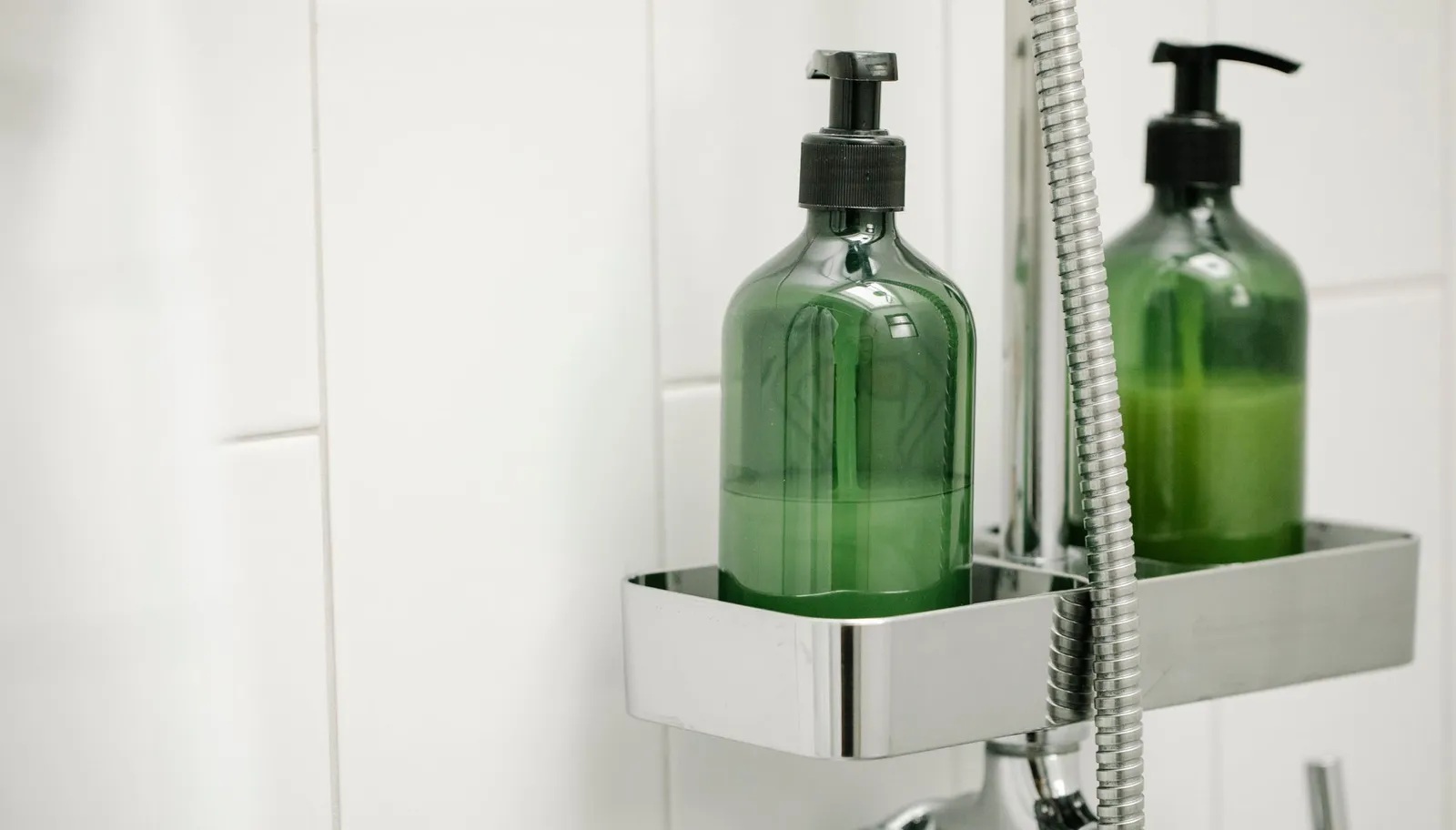
Short answer: Yes. A boutique hotel, resort or spa can sell its own brand of body wash, shampoo, conditioner and lotion made from a stock formula. At PMG that starts at 1,000 units with about 60–90 days to a first run; custom formulas take 4–6 months at 5,000 units. Plan for dispenser sizes: several states restrict small plastic bottles.
Definition. Private label hotel amenities are guest bath and body products (shampoo, conditioner, body wash, hand soap and lotion) made by a contract manufacturer from an existing formula and supplied or sold under the property's own brand.
Key stats: hotel amenities in 2026
- California: lodging establishments may not offer plastic bottles holding less than six ounces of personal care products: from Jan 1, 2023 for properties with more than 50 rooms and Jan 1, 2024 for smaller ones (CBS News Sacramento on AB 1162). [3]
- New York: hotels, motels, apartment hotels and boarding houses may not provide plastic bottles under 12 oz of products for cleansing, conditioning or moisturizing: from Jan 1, 2025 (50+ rooms) and Jan 1, 2026 (fewer than 50) (NY DEC). [1]
- Washington: plastic containers under 6 oz of shampoo, conditioner, soap, body gel, lotion and hand sanitizer are restricted from Jan 1, 2027 (50+ units) and Jan 1, 2028 (fewer than 50) (WA Department of Ecology). [2]
- Marriott said replacing small shampoo, conditioner and bath gel bottles with larger bottles or wall dispensers by December 2020 would remove about 500 million small bottles, or 1.7 million pounds of plastic, a year (FOX 5 DC). [4]
- FDA's 2016 final rule removed 19 active ingredients, including triclosan and triclocarban, from consumer antibacterial soaps and body washes used with water (FDA). [6]
- Since Dec 29, 2024, cosmetic labels must include a U.S. address, phone number or electronic contact for adverse event reports under MoCRA (Arnall Golden Gregory summary of MoCRA). [10]
Which hotel amenities can you private label?
The usual guest-bath set is shampoo, conditioner, body wash, hand soap and body lotion. When these products only cleanse, condition, moisturize or add fragrance, FDA treats them as cosmetics [5]. PMG's personal care line includes body wash and shower gel, body lotion, and shampoo and conditioner, with fill sizes from travel to professional size [11].
Two exceptions change the rules:
- Antibacterial claims make it a drug. FDA says a cleanser intended to prevent disease is regulated as a drug, or as both a drug and a cosmetic, and gives antibacterial cleansers as an example. That means a Drug Facts label and OTC drug rules. FDA's 2016 rule also took 19 active ingredients, including triclosan and triclocarban, out of consumer antibacterial washes. [5] [6]
- "True soap" sits with a different agency. A bar or liquid that is mostly alkali salts of fatty acids, cleans because of them, and is labeled and sold solely as soap is regulated by the Consumer Product Safety Commission, not FDA. Add a moisturizing or fragrance purpose and FDA regulates it as a cosmetic. [5]
How do small-bottle laws change hotel amenity packaging?
| State | Who it covers | What is restricted | Dates |
|---|---|---|---|
| California | Lodging establishments (hotels, motels, resorts, B&Bs, vacation rentals) | Plastic bottles holding less than six ounces of personal care products [3] | More than 50 rooms: Jan 1, 2023 · Fewer than 50: Jan 1, 2024 |
| New York | Hotels, apartment hotels, motels, boarding houses | Plastic bottles under 12 oz of products for cleansing, conditioning or moisturizing [1] | 50+ rooms: Jan 1, 2025 · Fewer than 50: Jan 1, 2026 |
| Washington | Lodging establishments | Plastic containers under 6 oz (shampoo, conditioner, soap, body gel, lotion, hand sanitizer); may still be provided on request [2] | 50+ units: Jan 1, 2027 · Fewer than 50: Jan 1, 2028 |
Not a complete list. Sources: CBS News Sacramento, NY DEC, WA Ecology.
This table covers three states and is not a complete list. Check the rules in every state and city where you operate.
All three laws point the same way: refillable dispensers on the wall or counter, and larger bottles. Big chains moved first; Marriott began swapping small bottles for larger bottles or wall-mounted dispensers in 2019–2020 [4]. For a private label hotel brand, that changes the product plan. The dispenser refill becomes your main item, and a retail-size bottle for the spa counter or gift shop becomes the second.
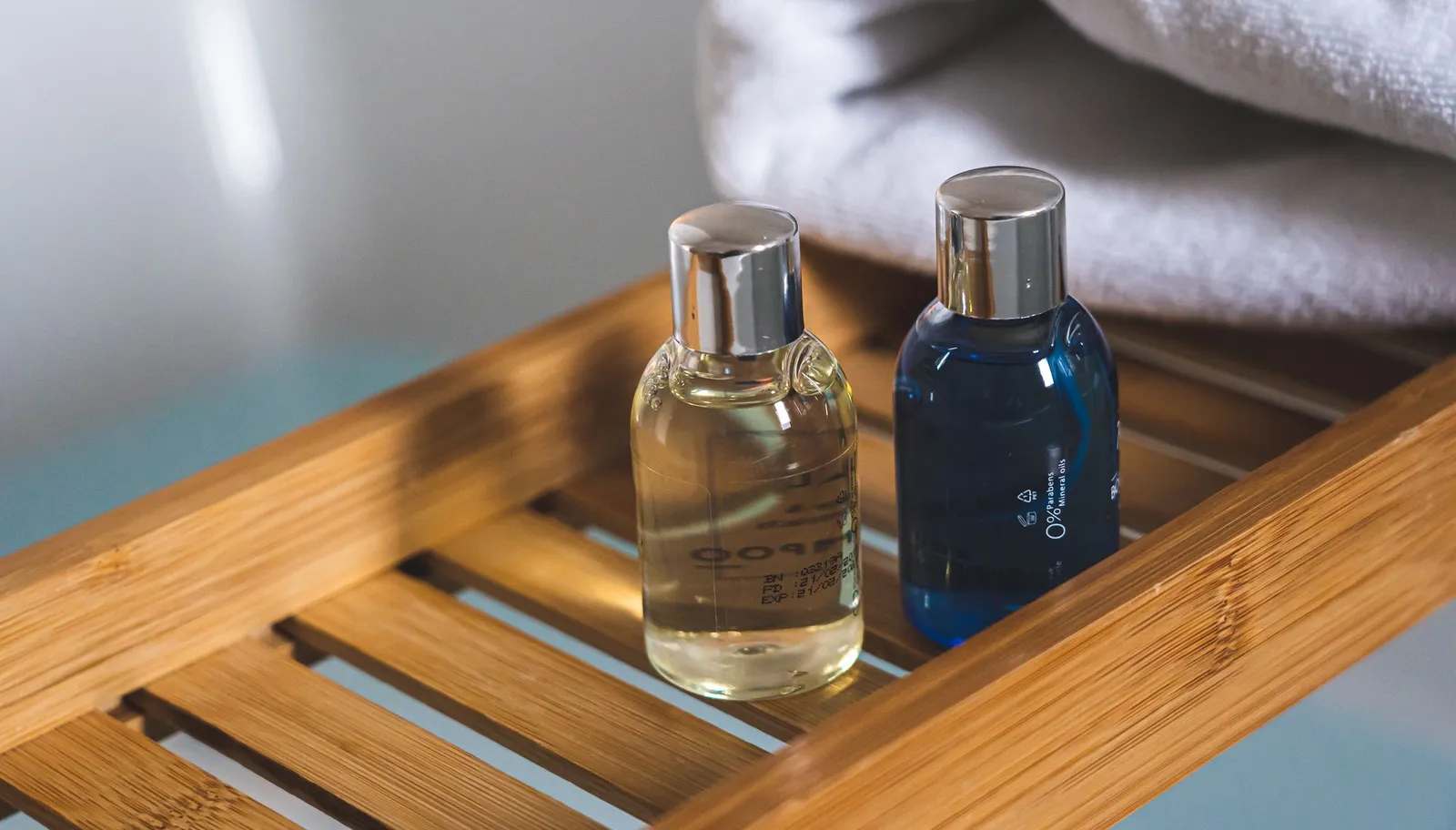
Stock, modified stock or custom: which path fits a hotel brand?
| Path | What you change | PMG minimum | PMG timeline | Best for |
|---|---|---|---|---|
| Stock formula (private label) | Brand name, label, package | 1,000 units | 60–90 days | A first property or a test of guest response |
| Modified stock | Fragrance, botanical add-ins, color or texture | Quoted per project | Depends on the change | A signature scent on a proven base |
| Custom formulation | The whole formula, which you own | 5,000 units | 4–6 months | Multi-property groups and exclusive formulas |
A modified stock formula sounds like a small step, but it isn't treated that way. Changing an ingredient, scent, color, texture or claim moves the project toward custom development, so the change has to be checked for stability and package compatibility (see private label vs custom formulation). A signature fragrance is often the main reason a hotel brand goes custom. If you need fewer than 1,000 units to start, read what a pilot batch is and what you can realistically do below 1,000 units. Smaller runs cost more per unit, because the setup costs are spread over fewer bottles.
What does a hotel amenity label need? (printable checklist)
Download the fillable checklist (PDF)
Hotel Amenity Label & Launch Checklist
- Statement of identity on the front panel (for example, “Body Wash”) [7]
- Net quantity of contents, set apart from other printing on the front panel [7]
- Ingredients in descending order of predominance [7]
- Name and place of business of the manufacturer, packer or distributor [7]
- U.S. address, phone number or electronic contact for adverse event reports (MoCRA) [8] [10]
- Warning statements where required, printed prominently [7]
- Fragrance allergens: MoCRA requires disclosure once FDA sets the list by rule, so leave room on the label [8]
- No antibacterial or medical claims, unless you are launching an OTC drug with a Drug Facts label [5]
- Registration and listing: manufacturers and processors register facilities with FDA every two years; each marketed product is listed with its ingredients and updated annually. Certain small businesses (under $1,000,000 in average U.S. cosmetic sales over the previous 3 years, adjusted for inflation) are exempt from registration and listing. [9]
- Dispenser plan: confirm with your manufacturer how refill containers and dispensers will be labeled, and check state rules where you operate
- Format by location: dispensers or large bottles for rooms in restricted states; retail sizes for the spa or gift shop
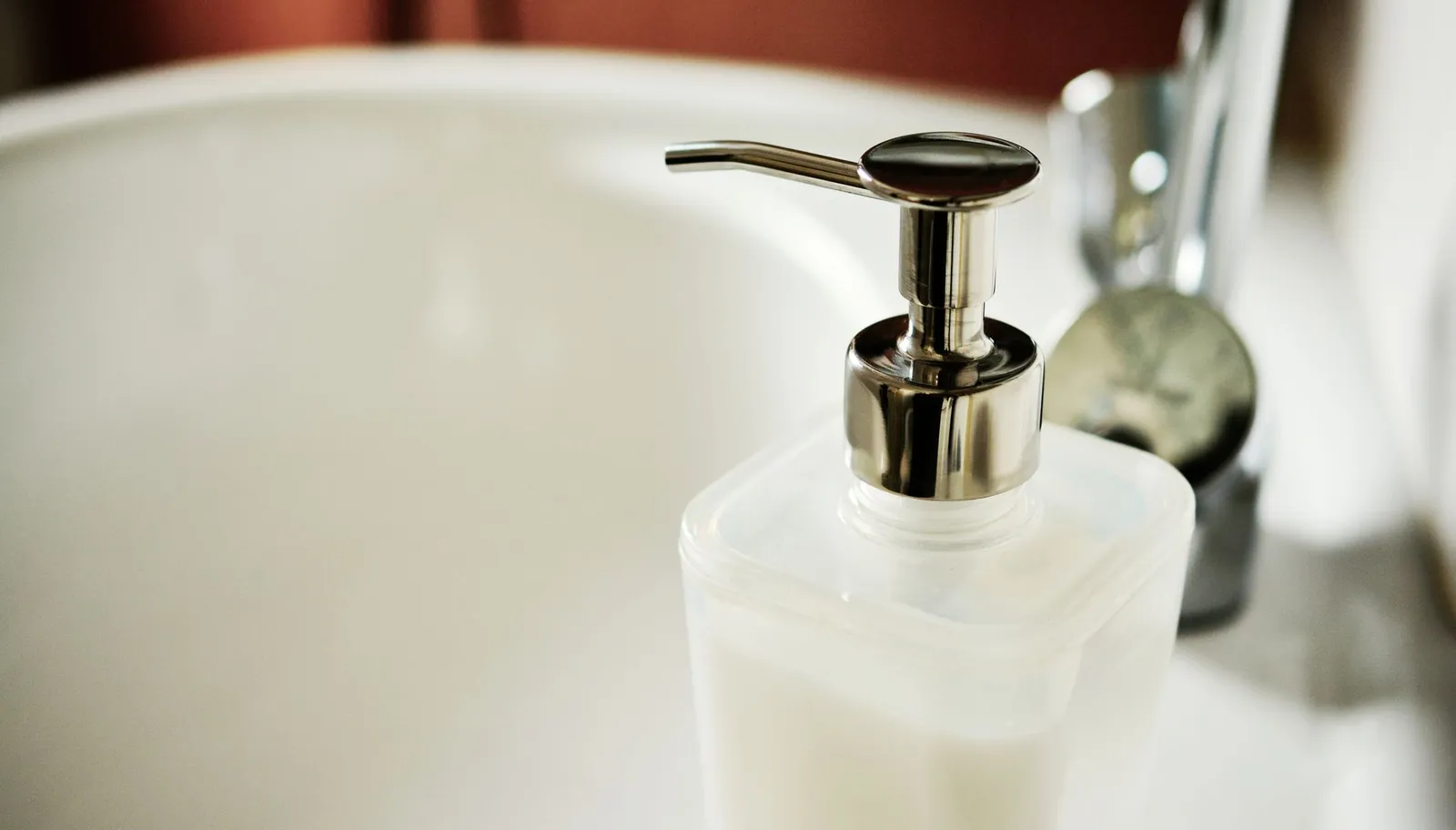
The Bottle-to-Dispenser Launch Path: six steps from idea to first run
- 1.Pick the products guests actually use. Most properties start with body wash, shampoo, conditioner and lotion, plus hand soap.
- 2.Choose formats by state. Dispensers and large refillable bottles for rooms; retail sizes for the spa or shop.
- 3.Pick the path. Stock (1,000 units, 60–90 days), modified stock, or custom (5,000 units, 4–6 months).
- 4.Approve samples and the fragrance. A new scent means development work and stability checks.
- 5.Confirm the regulatory status. Cosmetic or drug? Check every claim and run the label checklist above.
- 6.Schedule the first run and refills. Plan refill quantities around occupancy so you reorder before you run out.
Can the same amenities go to resorts in Latin America?
Often, yes, but each country has its own cosmetic rules. When PMG plans a Latin America launch, it screens ingredients against the restricted lists of regulators such as COFEPRIS (Mexico), ANVISA (Brazil) and INVIMA (Colombia) during formulation, and reviews labels and claims in the destination language. Plan this before you print packaging. See USA to Latin America expansion [13].
Frequently asked questions
What is the minimum order for private label hotel amenities?
At PMG, 1,000 units on a private label stock formula and 5,000 units on a custom formulation, the same minimums as other personal care products. [11]
How long does it take to launch hotel amenities?
About 60–90 days from contract to first run on a stock formula. A custom formula takes about 4–6 months, mostly because of development and stability testing. [12]
Can I add a signature scent to a stock formula?
Yes, but changing the fragrance turns a stock project into development work. The new version has to be checked for stability and package compatibility before production. [12]
Are small hotel shampoo bottles banned?
Not nationwide. California, New York and Washington restrict small plastic bottles in lodging on different dates and size cutoffs. Dispensers and larger bottles are allowed. [1][2][3]
Can I call my hotel hand soap antibacterial?
Only if you sell it as an OTC drug with a Drug Facts label. FDA's 2016 rule removed 19 active ingredients, including triclosan, from consumer antibacterial washes, so ask your manufacturer which actives are still allowed. [5][6]
Glossary
- Private label: a product made from a manufacturer's existing formula and sold under your brand.
- Stock formula: a ready, tested formula a manufacturer offers to several brands.
- Custom formulation: a formula developed for your brand, which you own.
- MOQ (minimum order quantity): the smallest production run a manufacturer will make.
- Bulk or wall-mounted dispenser: a refillable container fixed in the shower or at the sink, used instead of single-use bottles.
- MoCRA: the Modernization of Cosmetics Regulation Act of 2022, which added facility registration, product listing, adverse event reporting and labeling duties for cosmetics. [8]
- Drug Facts label: the standard panel required on OTC drug products, including antibacterial washes.
What Is a Pilot Batch, and Can Your First Production Run Be Under 1,000 Units?
Lab sample vs pilot batch vs first production run, why tiny runs cost more per unit, six realistic options below 1,000 units, and a downloadable readiness checklist.
Read the article →Can You Private Label Essential Oils and Aromatherapy Kits for Amazon?
How claims set the FDA category, what Amazon hazmat review needs, when caps must be child-resistant, and PMG's minimums.
Read the article →Can You Make Sugar-Free Pectin Gummies with Allulose?
How the gel changes without sugar, allulose vs sugar alcohols vs monk fruit and stevia, what a sugar-free label needs, and realistic minimums.
Read the article →How to Choose a Private Label Manufacturing Partner
10 questions to ask before you sign, plus a free evaluation checklist.
Read the article →MOQ and Manufacturing Volume: What Actually Matters
Why minimums exist, what they cost below volume, and how to plan a first run you can sell through.
Read the article →How Much Does It Cost to Manufacture Supplements?
A phase-by-phase breakdown of R&D, ingredients, production, packaging, and compliance costs.
Read the article →What Does It Take to Manufacture an OTC Acne Product?
Allowed actives and strengths, Drug Facts labeling, NDCs and registration, and realistic OTC minimums and timelines.
Read the article →Sources and references
- 1.New York State DEC, Small Plastic Hospitality Bottles https://dec.ny.gov/environmental-protection/recycling-composting/small-plastic-hospitality-bottles
- 2.Washington State Department of Ecology, Toiletries in lodgings https://ecology.wa.gov/waste-toxics/reducing-recycling-waste/plastics/toiletries-in-lodgings
- 3.CBS News Sacramento, New law bans hotels from giving guests small bottles of shampoo, soap, lotion https://www.cbsnews.com/sacramento/news/small-bottle-ban-california-law/
- 4.FOX 5 DC, Marriott banning little shampoo bottles by December 2020 https://www.fox5dc.com/news/marriott-banning-little-shampoo-bottles-by-december-2020
- 5.FDA, Is It a Cosmetic, a Drug, or Both? (Or Is It Soap?) https://www.fda.gov/cosmetics/cosmetics-laws-regulations/it-cosmetic-drug-or-both-or-it-soap
- 6.FDA, Skip the Antibacterial Soap; Use Plain Soap and Water https://www.fda.gov/consumers/consumer-updates/skip-antibacterial-soap-use-plain-soap-and-water
- 7.FDA, Cosmetics Labeling Guide https://www.fda.gov/cosmetics/cosmetics-labeling-regulations/cosmetics-labeling-guide
- 8.FDA, Modernization of Cosmetics Regulation Act of 2022 (MoCRA) https://www.fda.gov/cosmetics/cosmetics-laws-regulations/modernization-cosmetics-regulation-act-2022-mocra
- 9.FDA, Guidance for Industry: Registration and Listing of Cosmetic Product Facilities and Products https://www.fda.gov/media/170732/download
- 10.Arnall Golden Gregory, FDA Modernizes Cosmetic Product Labeling Requirements https://www.agg.com/news-insights/publications/magics-in-the-makeup-fda-modernizes-cosmetic-product-labeling-requirements/
- 11.PMG, Personal Care (MOQ FAQ; product list; fill sizes) https://productmgmtgroup.com/industries/personal-care
- 12.PMG, Private Label vs Custom Formulation https://productmgmtgroup.com/services/private-label-vs-custom-formulation
- 13.PMG, USA to Latin America Expansion https://productmgmtgroup.com/markets/usa-to-latam-expansion
Hotel Amenity Label & Launch Checklist
A fillable 1-page checklist to complete before you approve labels or schedule a first run.
PDF · 1 page
About Product Management Group
PMG is a full-service private label manufacturing partner for skincare, nutraceuticals, supplements, personal care, and wellness brands. We handle everything from R&D and formulation through manufacturing, packaging, regulatory compliance, and fulfillment, working with FDA-registered, GMP-compliant partner facilities in Florida, North Carolina, Texas, Minnesota, and Arizona. We work with everyone from first-time founders to established retail brands, with minimums starting at 1,000 units.
Ready to plan your amenity line? Request a consultation.